
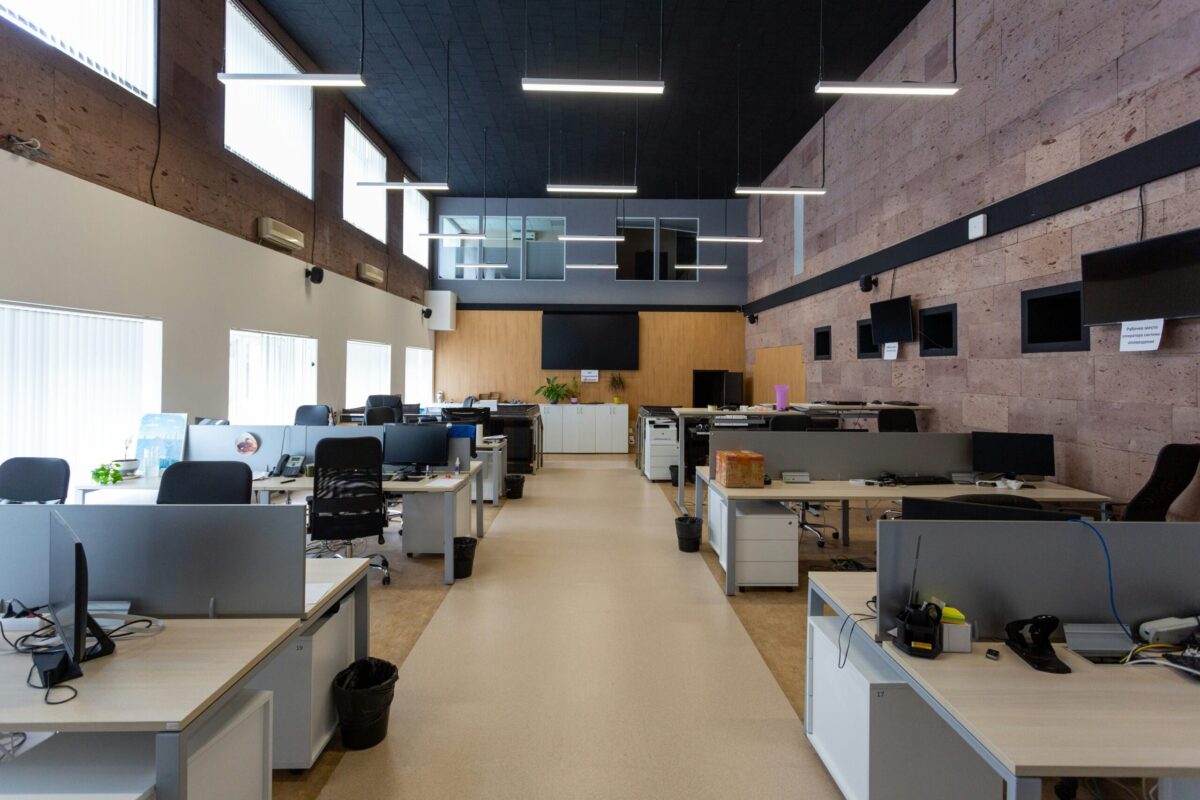
Office Cleanout Checklist: Remove Furniture, Electronics & More
Key Takeaways
- A well-organized office cleanout checklist can help businesses streamline the cleanout process and minimize disruptions.
- An office cleanout can be more than simply for desks and chairs; it can also include electronics, confidential documents, storage of goods, and miscellaneous equipment.
- Professional office cleanout services can aid large-scale removals and help firms stay efficient during transitions.
- Good preparation helps reduce downtime and protects valuables, all while taking care to remove unneeded clutter.
- A good cleanout service can facilitate workplace moves, renovations, downsizing attempts, and lease-end preparations.
Whether you’re relocating, remodeling, downsizing, or closing a workspace, an office cleanout can quickly become overwhelming without proper planning. The process often takes longer than expected due to heavy furniture, outdated electronics, and storage areas filled with unused supplies.
A well-organized office cleanout checklist is a great asset for organizations wanting to stay organized, safeguard critical assets, and make the transfer as easy as possible.
Common Mistakes to Avoid During an Office Cleanout
Office cleanouts often take longer than expected when businesses wait until the last minute to plan and coordinate the process. Some of the key mistakes companies make include not keeping an asset register, not thinking about how they’re going to deal with their sensitive data, not being sure how to get furniture out, and waiting until the lease expiration date is approaching before planning the cleanout.
Why Office Cleanouts Require Careful Planning
Office cleanouts, unlike residential cleaning tasks, can include several departments, technology systems, sensitive materials, and deadlines.
Without a proper plan, organizations can face unnecessary delays, missing equipment, or interruptions to normal operations.
Teams can better prioritize activities and allocate resources by creating a checklist before starting the process.
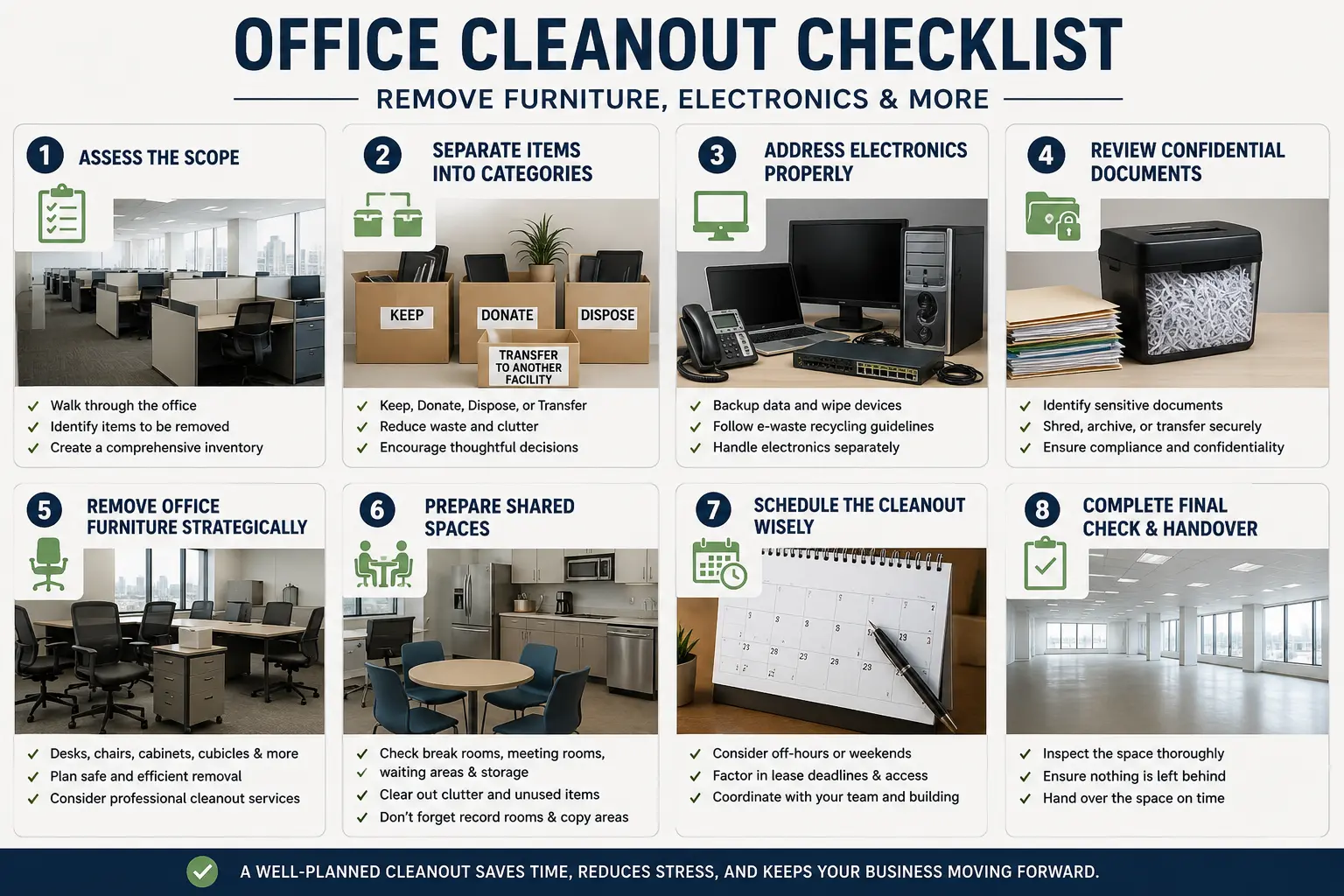
Step 1: Assess the Scope of the Cleanout
First, you need to identify what exactly has to be removed.
Walk through the office and find:
- Furniture scheduled for removal
- Electronics and outdated technology
- Filing cabinets and storage units
- Breakroom appliances
- Decorative items
- Excess office supplies
- Archived records
Creating a comprehensive inventory helps determine whether professional office cleanout may be beneficial.
Step 2: Separate Items into Categories
You don’t have to throw everything out.
As you walk through the contents of the office, separate objects such as:
- Keep
- Donate
- Dispose
- Transfer to another facility
This method encourages more thoughtful decisions and can lead to less waste.
Used office furniture, for instance, may assist non-profit groups; old electronics may need particular recycling processes.
Step 3: Address Electronics Properly
Electronics should be handled separately during an office cleanout because they often contain sensitive data and may require special recycling or disposal procedures.
Typical items include:
- Desktop computers
- Monitors
- Printers
- Telephones
- Networking equipment
- Keyboards and accessories
Make sure all vital data has been backed up and that devices undergo adequate data security procedures before removal.
Companies should check local disposal regulations as electronic waste is often handled separately.
Step 4: Review Confidential Documents
Even in modern offices, paper records remain an important consideration during a cleanout.
Never discard any documents with sensitive information without taking adequate precautions.
Businesses should identify materials that need:
- Secure shredding
- Archival storage
- Transfer to another location
- Compliance-based retention
Ensuring confidential information is protected is an important step for any good office cleanout checklist.
Step 5: Remove Office Furniture Strategically
Office furniture is usually one of the hardest items to remove because desks, cubicles, filing cabinets, conference tables, and reception furniture require careful planning and handling.
Items usually found in office cleanouts include:
- Desks
- Office chairs
- Conference tables
- Filing cabinets
- Cubicles
- Bookshelves
- Reception area furnishings
Scheduling the removal process together helps minimize disturbances in the workplace and creates a safer environment for the process.
In many cases, it can be much easier to deal with large items while working with a professional cleanout service.
Step 6: Prepare Shared Spaces
Shared spaces are often forgotten during office transitions.
Make sure to evaluate:
- Break Rooms
- Meeting Rooms
- Waiting Rooms
- Storage Cupboards
- Record Rooms
- Copy Stations
These areas are prone to collecting clutter and unused items.
Addressing these areas early helps improve efficiency and avoid last-minute surprises.
Step 7: Schedule the Cleanout Wisely
Timing is everything.
A lot of companies opt to do cleanouts during non-business hours such as evenings, weekends, or slack times of operation to limit disruptions.
Factors worth considering include:
- Lease deadlines
- Renovation schedules
- Employee availability
- Building access requirements
- Elevator reservations in multi-story properties
A little coordination can go a long way to make it easier for everyone involved.
Office cleanouts involve much more than simply removing old furniture. A good move is all about technology, securing documents, finding chances to donate, recycling considerations, and logistical planning.
Following an organized office cleanout checklist, organizations will be able to go through the procedure with more confidence and efficiency. Strategic preparation, with the help of expert office cleanout service providers when needed, can make the process much smoother and keep your business going forward if you are moving to a larger area or getting ready for a remodel.
Let Us Handle the Heavy Lifting
From sofas and mattresses to tables and dressers, our team can remove bulky furniture from your home without the hassle of doing it yourself.
Schedule Your Furniture PickupFrequently Asked Questions
What should be included in an Office Cleanout Checklist?
An office cleanout checklist should cover furniture removal, electronics handling, document management, storage areas, donation opportunities, recycling needs, and scheduling considerations.
When should a business hire office cleanout services?
Businesses often consider office cleanout services when facing large-scale relocations, renovations, downsizing projects, or situations involving significant amounts of furniture and equipment.
How should electronics be handled during an office cleanout?
Electronic devices should undergo appropriate data security procedures before being recycled, donated, or disposed of according to local regulations.
Can office furniture be donated?
Yes, you should be able to donate working office furniture to a nonprofit agency, school or charity organization. If your furniture is still in decent condition, it will continue to be useful to others while keeping these items out of landfills.
Why is planning important during an office cleanout?
Planning helps minimize operational disruptions, supports efficient resource allocation, protects sensitive information, and promotes a more organized transition process.
Explore Our Services
Furniture Delivery Services | Home Cleanouts | Mattress Disposal | In-Home Moving
Note: We do not take pianos, pool tables, general trash or appliances — but we have references for those items. Call (720) 877-7891 for a referral.
Keep reading
 Cleanout
·
August 11, 2026
Cleanout
·
August 11, 2026
Declutter Efficiently with This House Cleanout Checklist
Key Takeaways Decluttering an entire home can feel overwhelming, especially when years...
Read More → Cleanout
·
January 27, 2026
Cleanout
·
January 27, 2026
House Cleanout vs. Junk Removal: What’s the Difference?
When a home or a workspace begins to feel overloaded with unwanted...
Read More → Cleanout
·
December 22, 2025
Cleanout
·
December 22, 2025
Garage, Basement & Attic Cleanouts: What to Expect
Garages, basements, and attics often start with good intentions: extra storage for...
Read More →